Designed for West Africa's climate, combining robust modular housing with built-in clean energy and biological waste disposal systems.
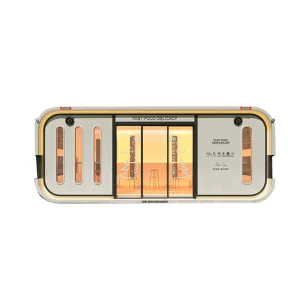
Rapid urban migration and climatic shifts within West Africa demand structural changes in municipal sanitation and household utilities. Mali, characterized by its vulnerability to the Sahelian climate and a growing need for sustainable economic pathways, stands at a pivotal junction. Standard waste management practices are no longer sufficient; instead, the deployment of modular, off-grid sanitation cabins and eco-friendly prefabricated housing with built-in biological filtration and home-composting interfaces offers a scalable solution.
By shifting to circular sanitation systems, communities can process organic waste directly where it is generated. This reduces municipal transport costs, improves community hygiene, and outputs nutrient-rich compost critical for the desertified soils of Mali. At Guangdong Greene Home Co., Ltd., we combine prefabricated construction technology with sustainable waste processing systems to deliver resilient living environments tailored for hot, arid, and semi-arid conditions.
Exploring the barriers, solutions, and practical implications of converting organic waste into soil conditioners in Sahelian ecosystems.
In Mali's residential areas, particularly in Bamako and regional hubs like Kayes and Ségou, organic matter accounts for over 50% of the household municipal solid waste stream. Yet, conventional municipal collections often struggle with logistically demanding routes, leading to localized burning or uncontrolled landfilling. This results in significant methane emissions and missed opportunities for soil enrichment. Home composting provides a direct remedy to this structural breakdown.
However, setting up successful home-composting initiatives in Mali involves facing unique geographic challenges:
"For Malian households, decentralized composting is not just an environmental choice—it is a critical economic buffer. Transforming organic food waste into structured humus protects household agriculture and controls localized waste accumulation."
How global industrial practices and high-efficiency Chinese manufacturing processes are driving down the costs of green infrastructure.
Industrial scale composting in the EU and North America relies on computerized in-vessel systems and aerated static piles (ASP). We adapt these paradigms into localized, scaled-down modular configurations for deployment in developing municipal infrastructures.
By leveraging Guangdong's manufacturing cluster, we utilize high-precision automation, lean supply-chain pipelines, and automated steel fabrication to manufacture structural housing components at a fraction of the cost of localized Western alternatives.
Guangdong Greene Home Co., Ltd. uses high-grade insulation (polyurethane panels), heavy-duty anti-corrosive galvanized steel framing, and non-toxic, recyclable interior coatings, ensuring structural durability in hot Malian environments.
Our operation encompasses five specialized factories focusing on different elements of eco-structures, from structural framing to internal sanitary fittings. This concentration allows us to achieve highly competitive manufacturing costs, pass savings onto B2B buyers, and maintain short turnaround times. This setup ensures that large-scale housing projects, mining camps, or ecolodges in West Africa receive prefabricated structures that are ready for immediate assembly and long-term use.
How modular architecture can be deployed to resolve critical environmental and sanitation needs across Mali.
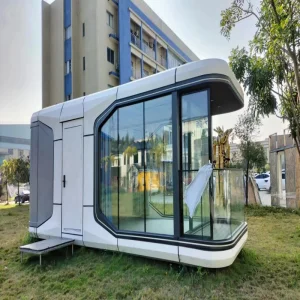
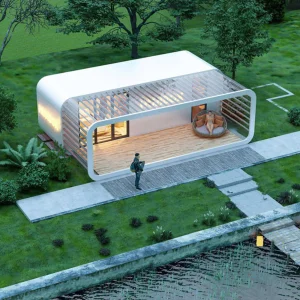
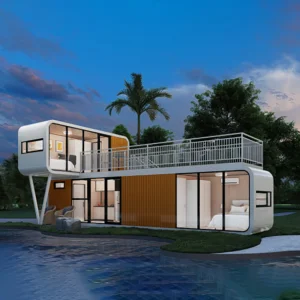
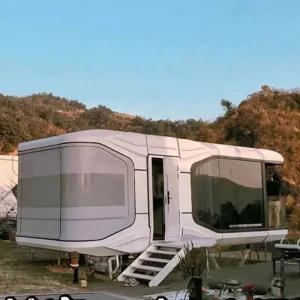
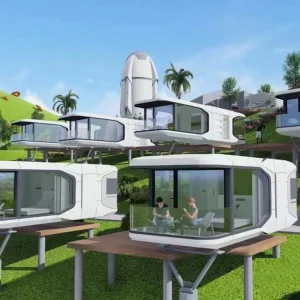
Tourism and cultural heritage developments near natural reserves or waterways require non-intrusive infrastructure. The installation of relocatable cabin pods, like our Modern Innovative Pods, provides luxury tourist accommodation without requiring deep concrete foundations. Integrating dry toilets and biological greywater filtration systems prevents river contamination, preserving local ecosystems.
Mali's gold mining sector requires rapid-setup, durable housing for workers in remote regions. Deploying stackable, waterproof containers with built-in sanitation systems ensures operations are compliant with local environmental laws. These units can be disassembled and moved once the mining lifecycle completes, leaving a minimal ecological footprint.
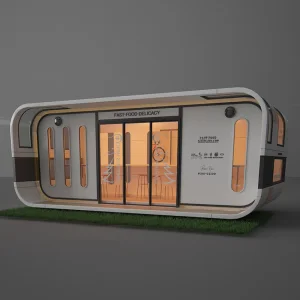
In dense settlements, small footprint public restrooms with biological waste processing can be used as micro-facilities. These structures utilize thermophilic composting toilets, transforming waste into pathogens-free fertilizer, which can then be used in urban farming schemes.
Guangdong Greene Home Co., Ltd. is a professional company dedicated to providing sustainable, eco-friendly solutions to meet the growing needs of our clients worldwide. Our team consists of five key factories supported by an elite group of professionals responsible for design, marketing, sales, logistics, and operations. Environmental protection is at the heart of our mission. We are committed to applying degradable materials and plastic substitutes to ensure that our products maintain a sustainable and eco-friendly approach, reducing our environmental footprint.
Thanks to the trust and loyalty of our clients in 28 countries around the globe, we have experienced rapid growth and success. Their continued support has been instrumental in our development, and we are grateful for the strong partnerships we've built. We are excited to explore new markets and are actively seeking partnerships with like-minded companies who share our commitment to quality and sustainability.

At Guangdong Greene Home Co., Ltd., we believe in innovation, quality, and integrity. Our dedicated team works tirelessly to ensure that each product meets the highest standards of craftsmanship and environmental responsibility.
We take pride in our rapid response times, on-time delivery, and our relentless commitment to superior quality. These are the core advantages that have enabled us to achieve significant growth year after year. As we continue to evolve and expand, we remain focused on maintaining long-term relationships with our clients and pushing the boundaries of sustainability in our industry.
We look forward to partnering with new clients who value the principles of innovation, sustainability, and quality. Together, we can help shape a greener and more responsible future.
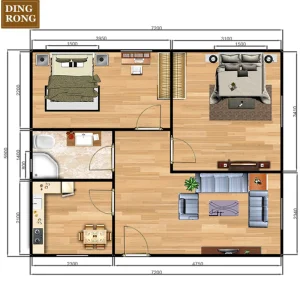
Engineered for thermal performance, durability, and rapid installation in commercial, industrial, or residential settings in Mali.
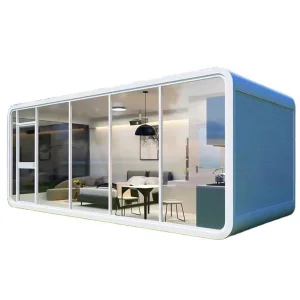
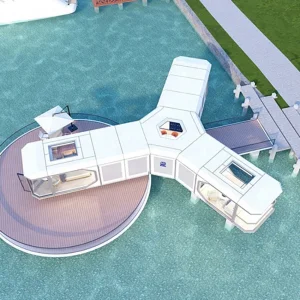
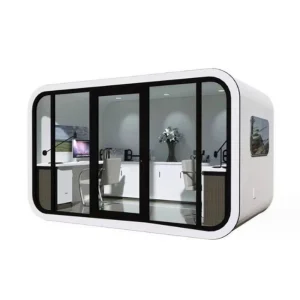
Explore Additional Architectural Configurations:
Technical clarifications on container structural ratings, composting implementation, and importing dynamics.
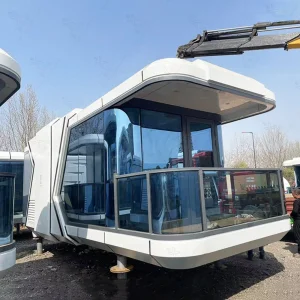
Our prefabricated containers and space cabins are constructed using high-density polyurethane (PU) or rock wool sandwich panels with low thermal conductivity. The structural framing is hot-dip galvanized steel, which resists rust and expansion under heat. Reflective exterior coatings are applied to deflect UV radiation, keeping energy consumption for internal air conditioning at a minimum.
Yes. Open-air composting fails in dry zones because moisture evaporates too quickly, pausing biological digestion. Our systems use sealed, insulated composting containers that retain moisture and maintain the internal thermophilic temperatures (55-65°C) required to destroy pathogens while speeding up digestion.
We deliver components in flat-pack or modular forms using standard sea freight containers. These units can be shipped directly to key ports like Dakar, Senegal, or Abidjan, Ivory Coast, and transported via rail or road to Bamako. The design features a bolt-together structure, requiring minimal specialized labor or heavy crane machinery for installation on site.
We offer integrated low-flow flushing systems, waterless composting toilets, and greywater/blackwater separation piping. These configurations can be customized based on your local water supply and ecological requirements during the structural engineering phase.
 Greene Home