A zero-waste kitchen is not a spotless showroom. It is a working space where food is used carefully, containers stay visible, and leftovers have a plan. How to organize a zero-waste kitchen begins with observing daily habits, not buying matching jars. In my own kitchen, one forgotten bag of spinach taught me more than a week of online advice. Waste often hides behind crowded shelves and unclear storage. A useful system makes the next choice easier.
This guide presents ten practical tips based on household organization, food-safety principles, and realistic reuse. Clear labels can prevent duplicate purchases. Open bins can reveal staples before they expire. A small compost container may reduce scraps, but it still needs frequent emptying and cleaning. Reusable wraps and containers work best when they are accessible, dry, and sized for common portions. “Sustainable” should also mean durable and affordable. Buying unnecessary products creates another kind of waste.
The process requires honest review. Some zero-waste routines look impressive but fail during busy evenings. I still occasionally lose track of herbs in the refrigerator. That failure matters. It shows where the system needs adjustment. These ideas can help renters, families, and small households create calmer storage without chasing perfection. Check local recycling and composting guidance, because accepted materials differ by region. With simple zones, visible supplies, and flexible habits, a kitchen can save food, money, and time while producing less waste.
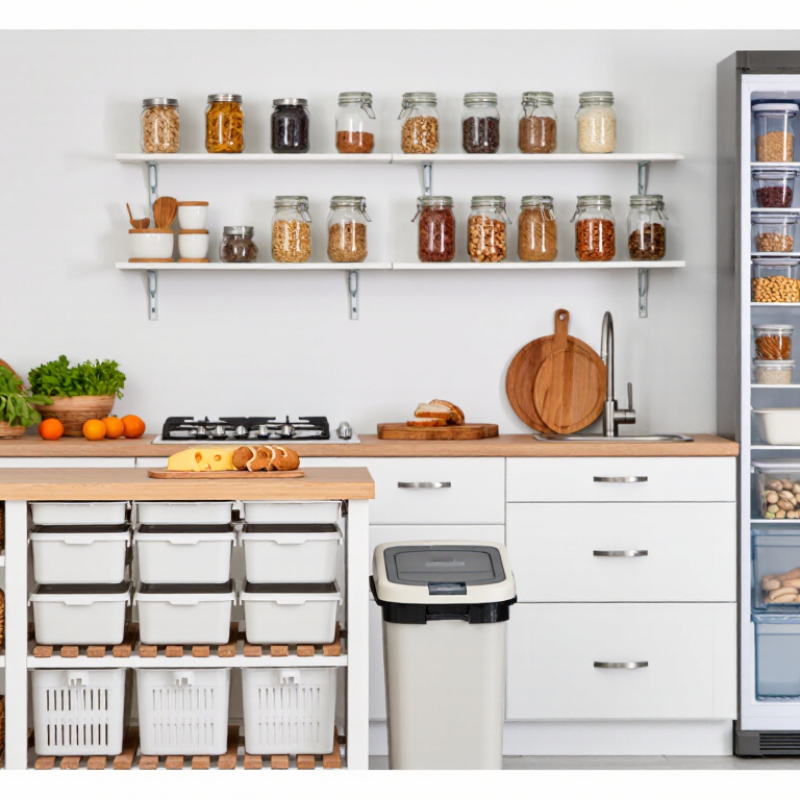
A zero waste kitchen begins with one principle: prevent waste before managing it. Buy only what your household can use, store food visibly, and treat leftovers as ingredients. The United Nations Environment Programme reported that households created 60% of global food waste in 2022. Its Food Waste Index Report 2024 estimated 1.05 billion tonnes were wasted across homes, food service, and retail. These figures make kitchen organization an environmental practice, not merely an aesthetic choice.
Keep a “use first” tray at eye level for soft fruit, opened produce, and cooked food. Date containers with washable labels, and follow official food safety guidance before eating questionable items. Store grains in airtight jars, measure staples before cooking, and freeze portions you can identify later. The U.S. Environmental Protection Agency ranks source reduction as the most beneficial waste-prevention strategy. In practice, a smaller shopping basket often beats a larger recycling bin. Small changes matter.
Composting can manage unavoidable scraps, but it should not excuse over-purchasing. I still find forgotten herbs behind jars; my system needs weekly adjustment. Visibility beats memory. A refrigerator inventory can expose duplicate purchases and reveal realistic eating patterns. WRAP’s household food waste research highlights planning, portion control, and proper storage as practical reduction measures. Reusable containers also need discipline: wash them promptly, keep lids together, and repair useful items before replacing them. Zero waste is not perfection. It is a daily design choice, tested against real habits.
| No. | Organizing Tip | Zero Waste Principle | Practical Kitchen Action | Useful Measure | Expected Benefit |
|---|---|---|---|---|---|
| 1 | Audit Kitchen Waste | Measure before changing habits. | Record discarded food, packaging, and disposable items for one week. Separate avoidable waste from unavoidable scraps. | Track waste by weight or by container volume. | Identifies the largest sources of waste. |
| 2 | Create a First-In, First-Out Zone | Use food before it expires. | Place older items at the front of the refrigerator and pantry, and keep newer purchases behind them. | Check dates and high-risk foods twice weekly. | Reduces spoilage and duplicate purchases. |
| 3 | Plan Meals and Portions | Prevent overbuying and overcooking. | Plan several meals around ingredients already available, then prepare a shopping list based on required quantities. | Plan 3–7 days of meals at a time. | Lowers food waste and unnecessary spending. |
| 4 | Store Food Correctly | Extend product usability. | Use airtight containers for dry goods, suitable storage for produce, and clearly labeled containers for leftovers. | Label prepared food with the storage date. | Helps maintain quality and improve visibility. |
| 5 | Choose Reusable Storage | Refuse single-use items and reuse what is safe. | Organize washable containers, cloth towels, reusable bags, and refillable bottles in one accessible drawer or shelf. | Keep frequently used items within easy reach. | Reduces reliance on disposable alternatives. |
| 6 | Buy in Appropriate Quantities | Avoid excess materials and unused food. | Purchase only the amount your household can use before quality declines, especially for fresh produce and perishables. | Compare planned quantity with actual use. | Minimizes surplus and storage pressure. |
| 7 | Use the Whole Ingredient | Value food resources before disposal. | Use vegetable stems, leaves, peels, and leftovers where safe and suitable; turn edible surplus into soups, sauces, or mixed dishes. | Reserve one meal each week for leftovers. | Improves ingredient utilization. |
| 8 | Set Up a Compost System | Recycle unavoidable organic waste. | Keep a ventilated container for suitable scraps and follow local composting rules for collection or home composting. | Empty the collection container regularly. | Diverts organic material from general waste. |
| 9 | Organize Recycling by Material | Recycle only what local systems accept. | Create clearly labeled sections for accepted paper, metal, glass, and plastic items, and confirm local preparation requirements. | Review local recycling guidance periodically. | Reduces contamination and rejected materials. |
| 10 | Maintain a Refill and Donation Area | Share usable items and reduce repeated packaging. | Store refillable staples in labeled containers and keep unopened surplus separate for timely donation or sharing. | Review surplus items once a month. | Prevents clutter and supports resource sharing. |
Core principle: Follow the waste hierarchy by refusing unnecessary items, reducing consumption, reusing durable products, repairing when possible, recycling accepted materials, and composting suitable organic waste.
Choose sturdy glass jars, washable cloths, metal strainers, and wooden utensils. Check comfort and repairability before buying. A beautiful unused tool is still waste.
Store rice, flour, and beans in clear, airtight containers. Add purchase dates to labels. Keep older food at eye level. This prevents forgotten ingredients from hiding in cupboards.
Use stackable containers with secure lids. Let hot food cool briefly, then refrigerate it within two hours. Shallow containers cool food more evenly. Do not judge safety by smell alone.
Track discarded food for one week. Record the item, amount, and reason. Buy smaller quantities and plan flexible meals. Freeze ripe produce and small portions. I still overbuy vegetables during busy weeks.
No. Some scraps can become stock, but not every scrap deserves storage. Keep a small container near the cutting board. Be realistic about what your household will use. That part is easy to misjudge.
Write the food name and date on every package. Keep the label readable. Freeze small portions instead of large leftovers. Smaller portions thaw and fit more easily.
Use a ventilated countertop caddy and empty it regularly. Mix food scraps with dry leaves or shredded paper. Follow local rules for meat, bones, and oily foods. Plastic liners may not be accepted. Check before guessing.
Rinse containers, remove loose food, and flatten cardboard. Keep recyclables dry. Do not place questionable items in the recycling bin. One wrong object can contaminate an entire collection stream.
Wash cloths fully and dry them promptly. Use visible reminders near the sink or laundry area. Choose durable tools instead of disposable wipes. Never mix cleaning chemicals. Guilt is not a system.
How to organize a zero-waste kitchen begins with understanding that waste reduction is a practical, ongoing process rather than a pursuit of perfection. Start by auditing your pantry, refrigerator, and drawers to identify what you already own, what regularly expires, and which items are purchased unnecessarily. Choose durable, reusable tools and storage solutions, while using clear containers and simple labels to keep food visible and organized. Replacing disposable products with washable alternatives can also reduce everyday waste.
Efficient planning makes a major difference. Create shopping lists based on existing supplies, select versatile ingredients, and plan meals that use leftovers creatively. Preserve food through proper refrigeration, freezing, drying, or other suitable methods, and separate unavoidable scraps for composting. Recycling should be clean and correctly sorted, while kitchen cleaning can rely on refillable, reusable, and less wasteful materials. With consistent habits, a well-organized kitchen can save money, prevent food waste, and support a more sustainable lifestyle.

 Greene Home