How to Choose Non Toxic Paints for Your Home?

Time:2026-10-01 Author:Charlotte
0%

Choosing paint for a living room involves more than matching a sofa or choosing a warm white. Paint can affect indoor air quality, especially in bedrooms, nurseries, and poorly ventilated spaces. The phrase “non-toxic” sounds reassuring, but it does not always have one consistent legal meaning. A careful buyer must look beyond the front label.

This guide explains How to choose non-toxic paints for home using practical, evidence-based checks. Start by reviewing the product’s VOC information, safety data sheet, ingredient disclosure, and independent certifications. Low-VOC or zero-VOC paint may reduce certain emissions, but it can still contain preservatives, pigments, or other substances that sensitive people may notice. “Zero” is not always simple.

Look for certifications from recognized testing organizations, and confirm what each certification actually measures. A reliable label should explain its standards, testing process, and limits. Also check the recommended ventilation time, washable finish, and suitability for children’s rooms. A glossy surface may clean easily, while a matte surface can hide wall flaws but show marks sooner.

Do not ignore the smell.

In practice, sample a small area first. Let it dry fully, then observe the room for several days. If anyone experiences headaches, throat irritation, or breathing discomfort, stop using the product and seek professional advice. Even a carefully selected paint needs proper ventilation, safe storage, and responsible disposal. The safest choice is not always the most expensive one. It is the product you can verify, use correctly, and tolerate comfortably.
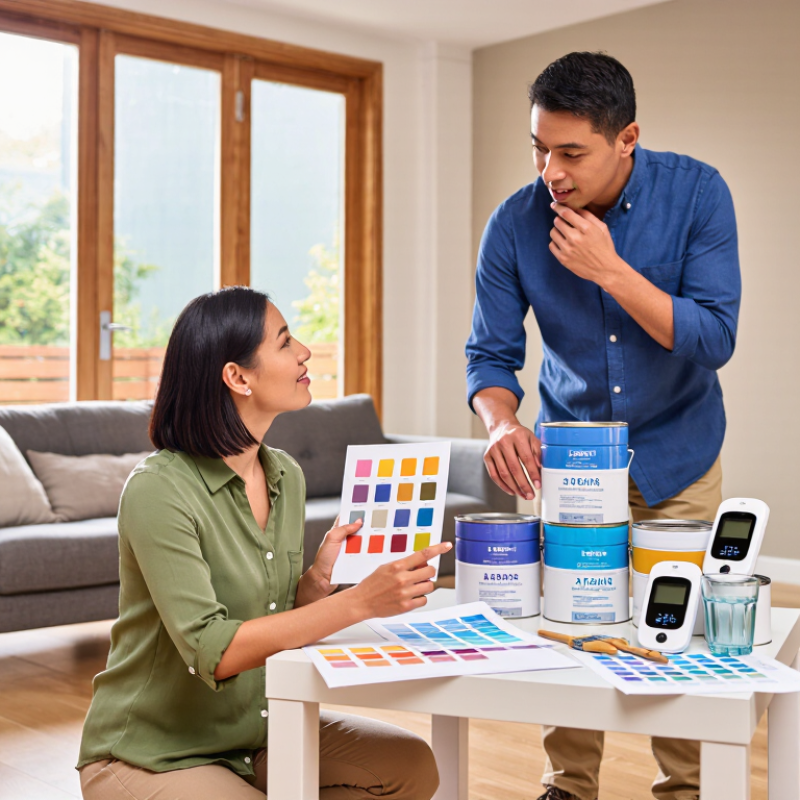
How to Choose Non Toxic Paints for Your Home?

Understanding What Makes a Paint Non-Toxic

Choosing a non-toxic paint starts with understanding its chemistry, not trusting a green-sounding label. No household paint is perfectly harmless. “Zero VOC” usually refers to volatile organic compounds, but it may not cover every preservative, pigment, or additive. The U.S. Environmental Protection Agency reports that indoor pollutant levels are often two to five times higher than outdoor levels, and can exceed 100 times during certain activities. Fresh paint can contribute to that spike.

I look for a complete technical data sheet and Safety Data Sheet before buying. These documents should identify VOC content, hazardous ingredients, ventilation advice, and drying conditions. Independent emissions testing is also useful. The California Department of Public Health’s Standard Method v1.2 evaluates emissions from building products, including paints, inside controlled chambers. A product meeting this type of testing has stronger evidence than one carrying only vague environmental language. Still, certification is not a promise of zero exposure.

Practical details matter. Paint a small test patch first. Notice its odor after 24 and 72 hours. Keep windows open, use cross-ventilation, and avoid sleeping in the room while the coating cures. Children, pregnant people, and anyone with asthma may need extra caution. I have found that “low odor” can feel reassuring, but it is not the same as non-toxic. That distinction is easy to miss. EPA guidance also recommends ventilation during painting and for several days afterward. Read the label twice; I still occasionally assume a familiar term means more than it does.

Checking Paint Labels and Safety Certifications

How to Choose Non Toxic Paints for Your Home?

Checking Paint Labels and Safety Certifications

When I compare paints, I start with the full label, not the front-panel claims. Look for VOC content, ingredient warnings, ventilation instructions, and recommended uses. Words such as “natural” or “eco-friendly” are not safety certifications. “Low odor” also does not always mean low emissions. Do not trust slogans alone.

Check whether an independent organization tested the finished paint, including its colorants and additives. A certification should name the standard, testing scope, approval date, and product category. Some marks evaluate indoor emissions, while others focus on chemical restrictions or manufacturing practices. A “zero-VOC” claim may exclude tinting, so ask whether the colored version was tested. Read the technical data sheet when available.

Pay attention to warnings for children’s rooms, allergies, and poor ventilation. Open a window during application. Keep the can away from food areas and store it securely. I once chose a paint with an impressive label but missed a warning about extended curing time. The room smelled acceptable, yet I ventilated it for several extra days. That experience changed my checklist.

Compare the label with the certification directory or issuing organization’s website. Check the exact product name, finish, and color range. A certificate for one finish may not cover every finish. Keep photos of the label and documents. Paint information can change, and memories are unreliable.

Comparing Paint Ingredients and Indoor Air Quality

How to Choose Non Toxic Paints for Your Home?

Paint ingredients can change indoor air quality long after the walls look dry. Water-based paint usually releases fewer solvents than solvent-based formulas. However, “low VOC” does not mean chemical-free. Some products still contain preservatives, co-solvents, or fragrance compounds. These ingredients may bother people with asthma, allergies, or chemical sensitivity.

Read the ingredient information and safety data sheet before buying. Look for clear details about VOC content, curing time, and recommended ventilation. Independent emissions testing can provide stronger evidence than vague marketing language. Pigments also matter. Certain mineral pigments may contain unwanted metal impurities, so choose products with transparent testing information. Check the label carefully.

I once assumed that a faint smell meant the paint was harmless. That was too simple. Odor is not a reliable safety test. A paint can smell mild yet release irritating compounds. After painting, keep windows open and use a fan to push air outdoors. Avoid sleeping in the room until the surface has cured. Dry walls are not always fully cured. Homes with infants, older adults, or respiratory conditions need extra care. I would also sample a small painted area first, because real ventilation differs from laboratory conditions. Even careful choices can leave unanswered questions.

How to Choose Non-Toxic Paints for Your Home? – Comparing Paint Ingredients and Indoor Air Quality
Comparison Dimension Conventional Water-Based Acrylic or Latex Paint Low- or Zero-VOC Water-Based Paint Oil-Based Alkyd Paint Water-Based Alkyd or Hybrid Paint Mineral-Based Paint
Primary Binder Acrylic, vinyl-acrylic, or other synthetic polymer dispersed in water. Usually an acrylic or vinyl-acrylic polymer formulated with reduced volatile ingredients. Alkyd resin made from modified oils and dissolved in organic solvents. Alkyd resin dispersed or emulsified in water, often combined with acrylic components. Commonly lime, silicate, clay, or cement-based binders; formulation varies by product.
Main Carrier Primarily water, with small amounts of coalescing solvents and other additives. Primarily water, with reduced levels of volatile coalescents and solvents. Organic solvents such as mineral spirits or other hydrocarbon solvents. Water is the main carrier, although some coalescents and organic solvents may remain. Water is generally the main carrier; some formulations contain alkaline mineral components.
VOC Potential During Application Low to moderate, depending on formulation and colorant. Generally low, but “zero VOC” labeling does not mean zero chemical emissions. High compared with water-based alternatives, especially while wet and curing. Usually lower than traditional oil-based paint, but higher than some low-VOC acrylic paints. Often low in organic VOCs, but alkaline ingredients may affect handling and comfort.
Typical Odor Usually mild to moderate; odor decreases as the paint dries and ventilates. Usually mild, although sensitive individuals may still notice odors from additives or colorants. Strong solvent odor that can persist during drying and curing. Moderate odor; typically less solvent-like than traditional oil-based paint. Usually low organic-solvent odor, but mineral or alkaline odors may be noticeable during application.
Important Additives to Check Coalescents, glycol ethers, defoamers, surfactants, preservatives, and colorants. Preservatives, coalescents, glycol ethers, ammonia or amines, and tinting colorants. Mineral spirits or similar solvents, driers containing metal compounds, pigments, and preservatives. Coalescents, glycol ethers, drying agents, preservatives, and colorants. Alkaline materials, mineral pigments, preservatives, and formulation-specific additives.
Preservatives and Sensitizers May contain in-can preservatives such as isothiazolinones; these can trigger allergic contact dermatitis in sensitive people. May still contain preservatives even when the stated VOC level is very low. May contain preservatives and drying agents; solvent exposure is usually the larger short-term concern. May contain both water-based preservatives and oil-phase drying additives. Preservative content varies; alkaline formulations may be less dependent on some conventional preservatives.
Formaldehyde Consideration Do not assume that low VOC means formaldehyde-free; check the safety data sheet and manufacturer disclosure. “Zero VOC” claims do not automatically confirm the absence of formaldehyde or other non-VOC substances. Formaldehyde is not the primary solvent-related concern; check the full ingredient and emissions information. Review the safety data sheet because VOC content and formaldehyde content are separate properties. Check product-specific documentation; mineral chemistry does not by itself guarantee zero emissions.
Drying and Curing Usually dries to the touch within hours; full performance develops over a longer curing period. Often dries quickly, but ventilation remains important until odors have dissipated. Usually dries more slowly and may continue releasing solvents during curing. Generally dries faster than traditional alkyd paint, but curing can still take longer than acrylic paint. Drying depends on humidity, substrate absorption, and mineral chemistry; some types require careful application conditions.
Indoor Air Quality Impact Normally a better indoor choice than solvent-based paint when applied with adequate ventilation. Often among the better choices for occupied homes, provided additives and colorants are also reviewed. Can temporarily increase indoor solvent concentrations and may cause eye, nose, or throat irritation. Intermediate option; lower emissions than traditional alkyd paint are common but not guaranteed. Often favorable for organic-VOC reduction, but alkaline dust or vapors require protective handling.
Best Use in a Home Walls, ceilings, bedrooms, living areas, and general interior surfaces. Bedrooms, nurseries, offices, and rooms where odor and chemical emissions are a priority. Trim, doors, cabinets, and high-wear surfaces when durability and smooth flow are important. Trim, doors, cabinets, and floors where improved durability is desired with reduced solvent use. Mineral substrates, breathable walls, restoration work, and interiors where a matte mineral finish is preferred.
How to Evaluate the Product Review the safety data sheet, VOC content, ventilation instructions, and preservative disclosure. Look beyond the “zero VOC” claim and check wet-paint emissions, colorant contribution, preservatives, and independent emissions testing. Use only with strong cross-ventilation, appropriate respiratory protection, and strict drying-time controls. Compare the product’s VOC content and safety data sheet with a standard water-based acrylic alternative. Confirm the pH or alkalinity, required protective equipment, substrate compatibility, and indoor-use instructions.
Overall Indoor-Air Preference Good, when properly ventilated and fully cured before regular occupancy. Very good, especially when supported by transparent ingredient and emissions information. Least preferable for routine interior use because of higher solvent emissions. Good to moderate, depending on the formulation and ventilation conditions. Potentially very good for reducing organic VOCs, but handling safety and alkalinity must be considered.
Selection note: VOC content is only one part of indoor-air quality. A paint labeled “zero VOC” may still contain preservatives, colorants, coalescing agents, or other compounds that are not included in the VOC number. Before purchase, review the safety data sheet, request full ingredient or emissions information, choose the lowest-emission formulation suitable for the surface, and ventilate continuously during application and drying.

Choosing the Right Non-Toxic Paint for Each Room

How to Choose Non-Toxic Paints for Your Home?

Choosing paint by room matters because exposure, moisture, and cleaning needs differ. The U.S. Environmental Protection Agency reports that indoor pollutant levels can be two to five times higher than outdoors, and sometimes much higher. Fresh paint can add volatile organic compounds, even when the smell seems mild. “Low-VOC” is useful, but it does not mean chemical-free. Check the technical data sheet, emissions testing, and curing guidance.

For bedrooms and nurseries, choose water-based paint with independently tested low emissions. Keep the room ventilated before sleeping there. A small fan helps. For living rooms, prioritize low-VOC formulas with good scrub resistance, especially near hallways and children’s play areas. The U.S. Green Building Council’s LEED criteria also emphasize VOC limits and emissions testing for interior materials. Yet labels can confuse me, too; a low number does not always predict the final indoor odor.

Kitchens and bathrooms need moisture resistance, but strong preservatives may affect sensitive occupants. Select a washable coating designed for humid spaces, then ventilate during application and drying. For trim and doors, water-based products usually create less lingering odor than traditional solvent-heavy coatings. The California Air Resources Board has repeatedly identified architectural coatings as an important source of indoor and outdoor VOC emissions. Do not paint over damp walls. I have learned that rushing this step causes peeling, mold-like smells, and unnecessary repainting. Check the safety data sheet, protect food surfaces, and allow extra curing time before regular use.

Applying, Storing, and Disposing of Paint Safely

Choosing non-toxic paint starts with reading the label, not trusting a “natural” claim. Look for low-VOC or zero-added-VOC information, then check the safety data sheet. No household paint is entirely risk-free. The U.S. Environmental Protection Agency estimates that American households generate about 1.6 million tons of hazardous waste annually. Paint deserves careful handling.

Open windows and create cross-ventilation before applying paint. Use a suitable mask, protective gloves, and safety glasses, especially during sanding or spraying. Keep children, pets, food, and open flames away from the work area. Apply thin coats and allow proper drying time. A strong smell is not a reliable safety test. I still make mistakes, such as closing windows too early on cold days.

Store leftover paint in its original, clearly labeled container. Wipe the rim clean, seal the lid firmly, and keep the container upright in a cool, dry cabinet. Do not store paint near heaters or direct sunlight. European Chemicals Agency guidance emphasizes controlling chemical exposure through labels, ventilation, and safe storage. For disposal, never pour paint into a sink, toilet, or storm drain. The EPA recommends using local household hazardous-waste programs. Some communities accept reusable paint through collection events. Others allow fully dried residue in ordinary waste, but only under local rules. Check first.

FAQS

What should I check on a paint label?

Read the full label, not only the front panel. Check VOC content, ingredient warnings, ventilation needs, and recommended uses. Read beyond slogans.

Does “natural,” “eco-friendly,” or “low odor” prove paint is safe?

No. These phrases are not safety certifications. Low odor does not always mean low emissions. Check the technical data sheet.

How can I verify a paint certification?

Look for the testing standard, approval date, product category, and testing scope. Then compare the certificate with the issuing organization’s directory. Check twice.

Does a zero-added-VOC claim cover tinted paint?

Not always. Some claims exclude added colorants. Ask whether the exact color and finish were tested. The colored version matters.

How should I ventilate a room during painting?

Open windows before application and create cross-ventilation. Keep ventilation running during drying. I sometimes close windows too early on cold days.

What protective steps are useful while painting?

Keep children, pets, food, and flames away from the work area. Use suitable gloves, eye protection, and a mask during sanding or spraying. Apply thin coats.

How should leftover paint be stored?

Keep it in the original labeled container. Wipe the rim, seal the lid, and store it upright. Choose a cool, dry cabinet away from heaters and sunlight.

How should unwanted paint be discarded?

Never pour it into a sink, toilet, or drain. Check local household hazardous-waste rules or collection events. Some areas accept dried residue, but rules differ. Check first.

Conclusion

Choosing non-toxic paint for your home begins with understanding what makes paint safer for indoor use. Look for low or zero VOC formulas, minimal harmful additives, and clear ingredient information. When asking “How to choose non-toxic paints for home,” check the label for safety certifications, emissions testing, and guidance for sensitive occupants. Compare ingredients carefully, since low odor does not always mean low emissions, and consider how paint may affect indoor air quality over time.

Different rooms may require different qualities: washable finishes can suit kitchens and bathrooms, while low-emission products are especially helpful in bedrooms, nurseries, and living areas. Always prepare the space with good ventilation, follow application instructions, and use suitable protective equipment. Store leftover paint in sealed, clearly labeled containers away from heat and children. Dispose of unused paint through approved local collection or recycling services rather than pouring it into drains or onto the ground.

Charlotte

Charlotte

Charlotte is a seasoned marketing professional with a deep understanding of the company's portfolio and a passion for elevating its presence in the market. With a keen eye for detail and a commitment to excellence, she ensures that our professional blog is regularly updated with insightful articles......