What Is Composting and How to Start at Home?

Time:2026-09-26 Author:Oliver
0%

What is composting and how to start at home? It is a practical way to turn food scraps and yard waste into a dark, crumbly material that can support garden soil. The process depends on tiny organisms breaking down organic matter, with enough air and moisture to do their work. It is not magic, and it is rarely instant. A healthy compost pile may smell earthy, like damp leaves after rain, rather than sour or rotten.

Getting started does not require a large garden or expensive equipment. A small outdoor bin, a covered container, or a suitable indoor system can work, depending on your space. Add “greens,” such as vegetable peels and coffee grounds, alongside “browns,” such as dry leaves, shredded cardboard, or small twigs. Chop larger pieces when convenient; they usually break down more readily. Keep the mix lightly moist, like a wrung-out sponge, and turn it now and then to let air reach the center. Keep it simple.

Avoid adding meat, dairy, oils, and pet waste to a basic home pile, since they can attract pests or create unpleasant odors. Local waste guidance may differ, so check it before adding unfamiliar materials. If the pile smells bad or stays soggy, add dry browns and gently mix it. If it seems dry, add a little water. Results vary with temperature, materials, and attention, and mistakes are part of learning. The first batch may look uneven. That is normal. A modest, well-managed pile is a useful start, even when it takes longer than expected.
What Is Composting and How to Start at Home?

What Composting Is and How It Works

Composting is the natural breakdown of food scraps and yard waste into a dark, soil-like material. Tiny organisms, including bacteria and fungi, do most of the work. They need food, water, and oxygen. As they digest scraps, the pile may warm up, especially when it is large and well mixed. Small home bins may not get very hot, and that is normal.

A useful pile balances “greens,” such as vegetable peels and fresh grass, with “browns,” such as dry leaves, torn cardboard, and small twigs. Browns add carbon and help air move through the mix; greens provide nitrogen. Chop bulky scraps into smaller pieces, then layer them loosely. The texture should feel like a wrung-out sponge, not soggy mud. Turn the pile now and then to bring in oxygen. If it smells sour, it may be too wet or packed too tightly. I have found that judging moisture takes practice; the first batch can be uneven.

Tips: Keep a small covered container for kitchen scraps, but empty it regularly. Avoid meat, dairy, and oily foods in a basic backyard pile, since they can attract pests. Finished compost is usually dark, crumbly, and earthy-smelling. Mix a little into garden soil, and leave anything still recognizable to break down longer.

What to Compost and What to Keep Out

Good compost starts with a mix of moist “greens” and dry “browns.” Add fruit and vegetable scraps, coffee grounds, tea leaves, crushed eggshells, and fresh plant trimmings. Balance them with dry leaves, plain shredded paper, or small pieces of uncoated cardboard. Chop larger scraps into smaller pieces; they break down more quickly. Aim for a pile that feels like a wrung-out sponge, not a soggy bin. Keep it simple.

Leave out meat, fish, dairy, bones, and oily foods in a typical home pile. They can attract pests and create unpleasant odors. Pet waste, glossy paper, treated wood, and plants with serious disease are also poor choices. Avoid weeds carrying mature seeds, unless your compost system gets hot enough to destroy them. “Compostable” packaging may need special processing, so check local collection guidance before adding it.

A sour smell often means the pile is too wet or has too many food scraps. Mix in dry leaves or shredded cardboard, then turn the material gently. Too dry? Add a little water. The balance is not always perfect, and that is normal. Small adjustments beat throwing in everything and hoping.

How to Choose and Set Up a Home Composting System

Choose a composting system around your space and routine, not an idealized garden. A ventilated outdoor bin suits a yard and can handle more material. In a small home, a sealed worm bin or countertop collection container may fit better; check local guidance before adding food scraps. Keep the bin near where scraps are made, but away from doors and direct, harsh sun. Convenient placement matters.

For a basic outdoor pile, choose a level, well-drained spot and a bin with a lid and airflow. Add alternating layers of “greens,” such as fruit scraps, and “browns,” such as dry leaves or torn cardboard. A handful of soil can introduce microbes. Aim for a damp, wrung-out-sponge feel. Too wet? Add dry browns. Too dry? Add water. Avoid meat, dairy, and oily foods in a simple backyard setup; they can attract pests or cause odors. The setup is rarely perfect on day one.

Scale matters. The U.S. Environmental Protection Agency’s Advancing Sustainable Materials Management: 2018 Fact Sheet reports that about 25 million tons of yard trimmings and 2.6 million tons of food waste were composted in the United States. Those figures reflect broad systems, not home bins, but they show these materials can be diverted from disposal. A small container fills quickly. Empty it before scraps turn soupy, and keep a dry layer nearby. If the pile smells sour, adjust the mix rather than giving up.

How to Maintain Your Compost Step by Step

A compost pile needs a steady mix of “greens,” such as vegetable scraps, and “browns,” such as dry leaves or torn cardboard. Add them in loose layers, then check the moisture with your hand. It should feel like a wrung-out sponge, not drip when squeezed. Too dry? Add water. Too wet? Mix in dry leaves. Small adjustments work better than soaking the whole pile.

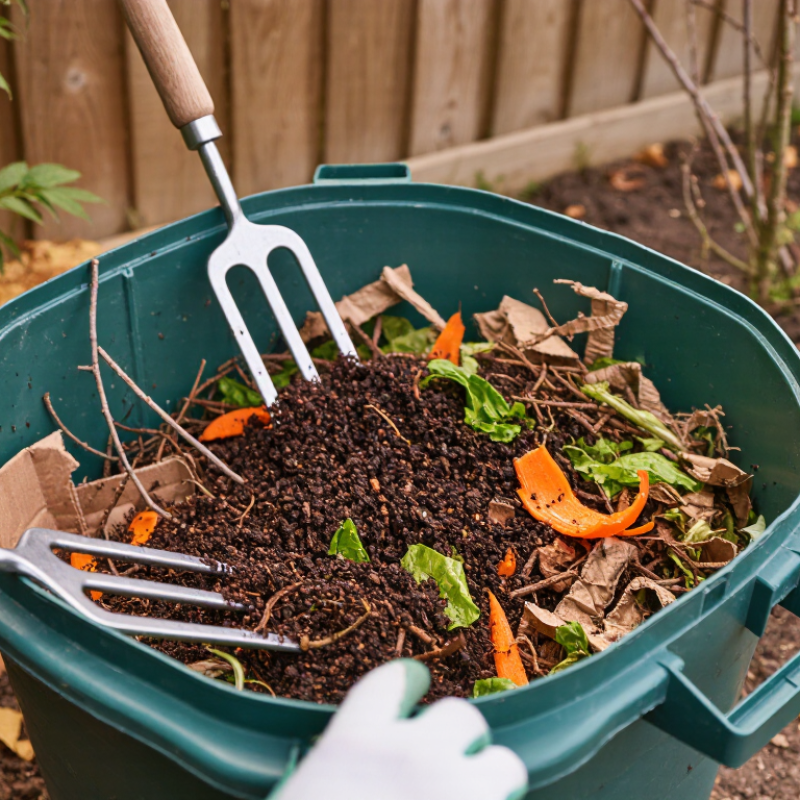
Check it weekly. Use a garden fork to turn the material, bringing outer scraps toward the warmer center. Air helps microbes break things down and can reduce sour smells. If the pile smells sharp or unpleasant, it may be too wet or packed tightly. Add browns and fluff it up. Avoid adding meat, dairy, or oily leftovers to a basic home pile; they can attract pests. That is normal.

Keep scraps chopped into smaller pieces, especially thick stems and fruit peels. They break down faster, though not every piece will vanish on schedule. Composting is messier and slower than many guides suggest. I would not judge a pile by its appearance alone. When the material is dark, crumbly, and earthy-smelling, sift out any recognizable scraps and return them to the pile. Let finished compost rest before spreading it around plants.

How to Tell When Compost Is Ready and Use It

Compost is ready when it looks dark and crumbly, smells like damp soil, and no longer heats up after turning. Most food scraps and leaves should be hard to recognize. A few small twigs may remain; sift them out and return them to the pile. If the compost smells sour or feels warm, give it more time. Readiness depends on ingredients, moisture, and weather, so the calendar is only a rough guide.

Let finished compost cure for a few weeks if you can. Then spread a layer about one to two inches thick over garden beds, or gently mix it into the top few inches of soil. Keep it away from plant stems. For containers, blend a modest amount with potting mix rather than filling a pot with compost alone. I once used a batch that looked finished but still held recognizable scraps. It worked eventually, though waiting longer would have made the texture more even.

Tips: Check the center, not just the surface. If unsure, wait another week and inspect again. Store finished compost covered, but not sealed airtight.

FAQS

What is composting?

Composting turns food scraps and yard waste into dark, soil-like material. Tiny organisms do the work. Small bins may not get hot.

What should go into a compost pile?

Balance “greens,” like vegetable peels and fresh grass, with “browns,” such as dry leaves, torn cardboard, and small twigs. Chop bulky scraps.

How moist should compost feel?

It should feel like a wrung-out sponge, not soggy mud. Add water if dry, or dry leaves if too wet. It takes practice.

How often should I turn compost?

Check it weekly and turn it with a garden fork. Move outer scraps toward the center. Air helps reduce sour smells.

Why does my compost smell sour?

It may be too wet or packed tightly. Add dry leaves and loosen the pile. Small fixes work better than soaking it.

Which kitchen scraps should I leave out?

Avoid meat, dairy, and oily foods in a basic backyard pile. They can attract pests. Keep scraps covered until you empty them.

How can I tell when compost is ready?

Look for dark, crumbly material with an earthy smell. Most scraps should be hard to recognize. If it feels warm, wait longer.

How should I use finished compost?

Let it cure for a few weeks if possible. Spread one to two inches over garden beds, away from plant stems.

Can compost go straight into a container?

Mix a modest amount with potting mix rather than filling the pot with compost alone. I once used a batch too soon. Waiting would have helped.

Conclusion

What is composting and how to start at home? Composting is the natural process of turning organic scraps into a dark, crumbly material that can enrich garden soil. A successful pile balances “greens,” such as fruit and vegetable scraps and fresh plant trimmings, with “browns,” such as dry leaves, cardboard, and small twigs. Avoid adding meat, dairy, oily foods, and materials that may attract pests or slow the process.

Choose a composting setup that fits your available space, from an outdoor pile or bin to a compact indoor system. Layer greens and browns, keep the mixture damp but not soggy, and turn it regularly to let air circulate. If it smells unpleasant, adjust the balance or add more dry material. Compost is ready when it is dark, loose, and earthy-smelling, with few recognizable scraps remaining. Mix it into garden soil or spread it around plants to improve soil structure and help retain moisture.

Oliver

Oliver

Oliver is a seasoned marketing professional with a wealth of expertise in driving brand awareness and engagement. With a deep understanding of our company's product offerings, he consistently delivers high-quality content that enriches our professional blog. His insights not only shed light on......