2026 Best Indoor Plants for Better Air Quality?

Time:2026-10-06 Author:Sophia
0%

Choosing the 2026 best indoor plants for better air quality requires more than copying a popular list. A leafy plant beside a desk can soften a room, reduce visual dryness, and encourage healthier daily habits. However, plants are not magical air filters. Their real benefits depend on species, pot size, light, ventilation, and consistent care.

Why indoor plants can improve air quality is linked to their natural biological processes. Leaves exchange gases, release moisture, and support small microbial communities in the growing medium. Some research suggests plants may absorb limited amounts of certain indoor pollutants. Yet ordinary homes often receive enough fresh air to reduce these effects. Better ventilation still matters most.

This guide examines practical choices for bedrooms, offices, kitchens, and low-light corners. It considers NASA-related research carefully, while recognizing that laboratory results may not match a busy home. Snake plants, pothos, spider plants, and peace lilies may suit different spaces. Their performance changes with watering, dust, sunlight, and room size.

Real experience matters here. A neglected plant can collect dust or develop moldy soil. That is not better air quality. We will discuss honest maintenance needs, pet-safety considerations, and realistic expectations for 2026. The best plant is often the one you can keep healthy. Small improvements count.
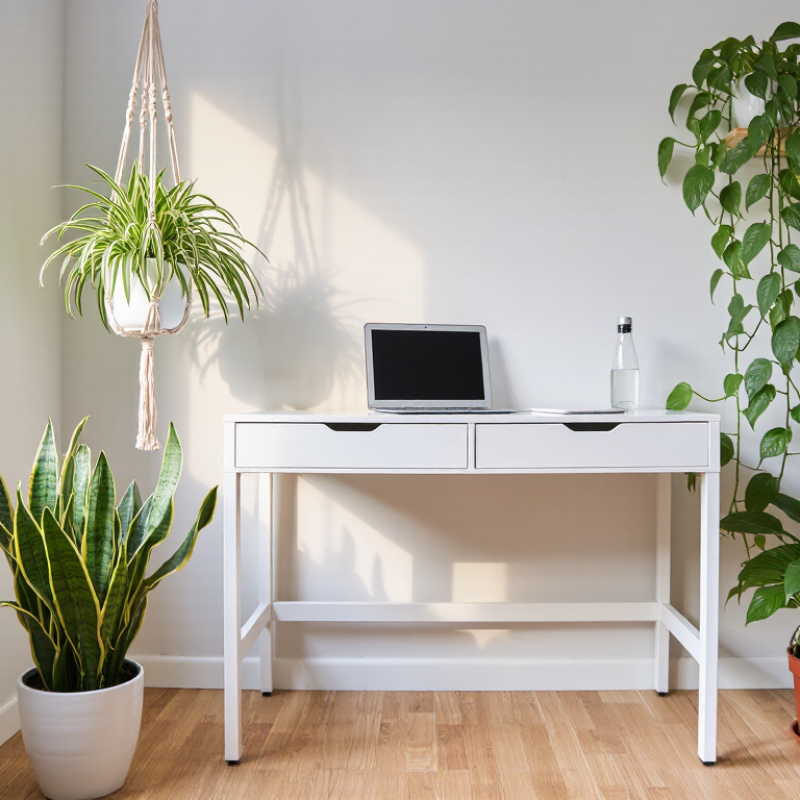
2026 Best Indoor Plants for Better Air Quality?

Understanding How Indoor Plants May Improve Air Quality

Indoor plants may support a healthier-feeling room, but their air-cleaning power needs careful interpretation. The U.S. Environmental Protection Agency reports that indoor pollutant levels can be two to five times higher than outdoor levels. Some pollutants may reach 100 times higher levels. This makes ventilation, filtration, and moisture control more important than decoration alone.

NASA’s Clean Air Study identified plants that removed certain chemicals inside sealed laboratory chambers. However, a home is not a sealed chamber. A later review by Waring and Cummings, published in the Journal of Exposure Science & Environmental Epidemiology, found that ordinary potted plants clean air too slowly in typical buildings. Their analysis estimated that roughly 10 to 1,000 plants per square metre might be needed to match normal ventilation, depending on conditions. That is not practical for most rooms. I once assumed a few leafy pots could replace an open window. The evidence challenged that assumption.

Tips: Choose plants that suit your available light. Keep leaves dust-free with a damp cloth. Avoid constantly wet soil, which can encourage mould. Use a ventilation fan during cooking and showering. A portable filter may help with fine particles. Never treat plants as a substitute for smoke alarms, carbon-monoxide alarms, or professional indoor-air testing. Their quieter value may be psychological: greenery can make a room feel calmer, even when measurable pollutant removal remains modest.

2026 Best Indoor Plants for Better Air Quality?

Understanding how indoor plants may improve air quality

Controlled-chamber studies show that potted plants can remove some volatile organic compounds (VOCs), but the measured effect in ordinary rooms is usually small compared with ventilation. A review estimated a median clean-air delivery rate of about 0.023 m³/h per plant. For a 25 m³ room, even 100 plants would provide approximately 2.3 m³/h of equivalent clean air, while 0.35 air changes per hour would provide about 8.75 m³/h.

Plants such as snake plants, spider plants, pothos, peace lilies, and palms can still support a healthier indoor environment through humidity, comfort, and connection with nature. Choose them primarily for suitable light, watering, and safety conditions rather than expecting them to replace fresh-air ventilation or filtration.

Data basis: Waring and Siegel, 2013, review of potted-plant VOC removal; ventilation comparison calculated for a 25 m³ room at 0.35 air changes per hour.

Choosing the Best Indoor Plants for Different Air Quality Needs

2026 Best Indoor Plants for Better Air Quality?

Choosing the Best Indoor Plants for Different Air Quality Needs

Indoor air needs are not identical, so plant choice should match the problem. The U.S. Environmental Protection Agency reports that indoor pollutant levels can be two to five times higher than outdoors, and occasionally much higher. A plant may improve a room’s appearance, but it cannot replace ventilation or source control.

For volatile organic compounds, broad-leaf plants such as pothos, spider plants, and peace lilies are often discussed. NASA’s 1989 Clean Air Study found that several plants removed pollutants in sealed laboratory chambers. However, homes are not sealed chambers. A 2019 review in the Journal of Exposure Science & Environmental Epidemiology estimated that ordinary ventilation often removes pollutants faster than potted plants. That finding deserves attention. The numbers are less exciting.

For dust and smoke, choose plants for comfort, not purification. Their leaves may catch small amounts of settled dust, but they do not reliably remove fine particles from moving indoor air. In bright rooms, rubber plants or dracaenas can provide substantial foliage. In dim corners, cast iron plants may survive better. Keep leaves clean with a damp cloth. For damp rooms, avoid constantly wet soil, which can encourage mold. A neglected pot can worsen the air it was meant to support. My recommendation is practical: match the plant to available light, water carefully, and use mechanical filtration when pollutants matter.

Comparing Plant Types, Air-Purifying Traits, and Care Requirements

2026 Best Indoor Plants for Better Air Quality?

In a bright apartment, broad-leaf plants can make stale corners feel fresher. Yet their real air-cleaning effect is modest in ordinary rooms. Laboratory studies often use sealed chambers, unlike homes with drafts, furniture, and open windows. Ventilation and source control still matter more. Not a cure.

Snake plants and ZZ plants tolerate missed waterings and dim shelves. They suit busy rooms, but slow growth limits their practical cleaning capacity. Spider plants prefer bright, indirect light and evenly moist soil. They grow quickly, although crowded roots can reduce vigor. For humid bathrooms, peace lilies may perform well, but they wilt dramatically when neglected. Sensitive residents should watch for discomfort around pollen or damp soil.

I have found that healthy leaves matter more than plant labels. Dusty foliage cannot function at its best, so I wipe leaves gently every few weeks. Overwatering creates fungus-friendly soil and may worsen indoor comfort. Too much water. Use pots with drainage, check moisture below the surface, and keep plants away from heating vents. I once chose a low-light plant for a dark hallway; it survived, but barely grew. That result changed my view: choose for care fit first, air claims second.

Placing and Caring for Indoor Plants to Support Cleaner Air

2026 Best Indoor Plants for Better Air Quality?

Indoor plants can support a fresher-feeling room, but they are not air purifiers. Ventilation, moisture control, and regular cleaning matter more. Choose plants that match your home’s light, temperature, and care routine. Place a light-loving plant near a bright window, but keep its leaves away from hot glass. A plant in dim light may survive, yet weak growth can reduce its practical value.

Keep plants where air can circulate gently. Avoid blocking vents or pressing pots against damp walls. In bedrooms, leave walking space around the leaves and check for mold on the soil surface. Water only when the top few centimeters feel dry. Empty saucers after watering. Wet roots often cause more trouble than dry leaves. I once underestimated a shaded corner; the plant looked healthy for weeks, then developed soft, yellow leaves.

Tips: Wipe broad leaves with a clean, damp cloth every few weeks. Dust can cover leaf surfaces and attract pests. Rotate pots slightly for even growth. Use a simple moisture check before watering. If you notice a musty smell, fungus, or repeated condensation, improve airflow and inspect the soil. Some claims about plants removing indoor pollutants come from controlled studies, not ordinary homes. That difference deserves attention. Fresh air still needs a window, exhaust fan, or mechanical ventilation.

Recognizing the Limits of Indoor Plants as Air Quality Solutions

2026 Best Indoor Plants for Better Air Quality?

Recognizing the Limits of Indoor Plants as Air Quality Solutions

Indoor plants can make a room feel calmer, greener, and less sterile. Their air-cleaning power, however, is often overstated. NASA’s 1989 chamber study found that certain plants removed volatile organic compounds under sealed conditions. Real homes are different. They have doors, windows, heating systems, dust, and changing pollution sources.

A 2019 review in the Journal of Exposure Science & Environmental Epidemiology estimated that homes might need roughly 10–1,000 plants per square metre to match ordinary ventilation. That is impractical. The U.S. Environmental Protection Agency reports that indoor pollutant levels can be two to five times higher than outdoors. Some pollutants may exceed outdoor levels by much more. A few pots cannot reliably control cooking smoke, dampness, combustion gases, or fine particles. I have also noticed a forgotten detail: wet soil can support mold growth when watering becomes excessive.

Tips: Choose plants for comfort, not as medical equipment. Keep leaves dust-free, avoid standing water, and inspect soil weekly. Open windows when outdoor conditions are safe. Use a properly sized particle filter for smoke and fine dust. Install carbon-monoxide alarms where combustion appliances operate. Plants may complement these measures, but they cannot replace source control, ventilation, or professional indoor-air testing.

2026 Best Indoor Plants for Better Air Quality? — Recognizing the Limits of Indoor Plants as Air Quality Solutions

Indoor plants can improve comfort, appearance, and perceived well-being, but ordinary numbers of potted plants have not been shown to replace ventilation, source control, filtration, or humidity management in occupied buildings. The choices below are practical indoor plants with useful growing characteristics—not certified air-cleaning devices.

Plant Light Preference Watering Needs Practical Indoor Benefit Air-Quality Relevance Important Limitation Pet Safety
Snake Plant Dracaena trifasciata Low to bright indirect light; avoid prolonged harsh direct sun. Allow the potting mix to dry substantially between waterings. Overwatering is a common cause of root rot. Very tolerant of occasional neglect and suitable for offices, bedrooms, and low-light rooms. Low-maintenance choice Its presence does not provide a dependable reduction of indoor pollutants at normal household plant densities. Toxic if chewed by cats or dogs; may cause gastrointestinal upset.
Spider Plant Chlorophytum comosum Bright indirect light; tolerates moderate light. Water when the upper portion of the mix begins to dry. Avoid prolonged waterlogging. Easy to propagate, adaptable, and useful for adding greenery to shelves or hanging containers. Good beginner option Older laboratory studies do not translate directly into meaningful pollutant removal in a normally ventilated home. Generally considered non-toxic to cats and dogs, although chewing any plant may cause mild stomach upset.
Peace Lily Spathiphyllum wallisii Medium to bright indirect light; can tolerate lower light but may flower less. Keep the mix lightly and evenly moist, but do not leave the pot standing in water. Provides broad foliage and visible wilting cues when it needs water. Humidity-sensitive rooms More frequent watering can encourage damp soil, mold, or fungus gnats if drainage is poor; it is not a substitute for humidity control. Toxic if chewed by cats or dogs because it contains insoluble calcium oxalates.
Golden Pothos Epipremnum aureum Low to bright indirect light; stronger indirect light helps maintain variegation. Allow the top layer of soil to dry before watering; use a container with drainage. Fast-growing, forgiving, and suitable for trailing displays or vertical greenery. Highly adaptable Plant growth and leaf surface area alone cannot provide predictable whole-room air purification. Toxic if chewed by cats or dogs because it contains insoluble calcium oxalates.
Rubber Plant Ficus elastica Bright indirect light; protect from cold drafts and intense afternoon sun. Water after the upper few centimeters of soil have dried. Reduce watering during darker, cooler periods. Large leaves create a substantial decorative foliage display in bright rooms. Best for bright spaces Large plants need adequate space, and wet soil or poor drainage can contribute to root problems and indoor moisture concerns. Toxic if chewed by cats or dogs; milky sap may irritate skin and the mouth.
Boston Fern Nephrolepis exaltata Bright, filtered light; avoid direct midday sunlight. Keep the soil consistently moist but not saturated; it performs best with higher ambient humidity. Useful for a lush appearance in rooms that already have suitable light and humidity. Higher-care option Frequent watering and poor air circulation can increase the risk of damp surfaces, fungus gnats, and microbial growth. Generally considered non-toxic to cats and dogs.
Areca Palm Dypsis lutescens Bright indirect light; gradual acclimation is needed when moving it into stronger light. Water when the surface begins to dry, while ensuring excess water drains freely. Offers substantial visual greenery for larger rooms and can support a comfortable indoor environment when properly maintained. Large-room greenery Any humidity effect from a plant is modest and localized; excessive watering may raise moisture around the pot rather than improve room air. Generally considered non-toxic to cats and dogs.
Parlor Palm Chamaedorea elegans Low to bright indirect light; protect from strong direct sun. Let the top layer dry slightly between waterings; avoid both drought and saturated soil. Compact, relatively slow-growing palm that suits apartments and offices with moderate light. Apartment-friendly Like other plants, it should not be counted as a measurable replacement for mechanical ventilation or particle filtration. Generally considered non-toxic to cats and dogs.

FAQS

Can indoor plants significantly clean the air in a normal home?

Usually, no. Their pollutant removal is modest in ordinary rooms. Ventilation and filtration work faster.

Why do laboratory plant studies differ from real homes?

Laboratories may use sealed chambers. Homes have drafts, furniture, open windows, and changing moisture levels.

How many plants might match normal ventilation?

Estimates range from 10 to 1,000 plants per square metre. That is impractical for most rooms.

Which plants suit people who often forget watering?

Snake plants and ZZ plants tolerate missed waterings and dim shelves. Their slow growth may limit air-cleaning value.

Where should a light-loving plant be placed?

Put it near bright, indirect light. Keep leaves away from hot glass and heating vents.

How can I keep plant leaves useful and healthy?

Wipe broad leaves gently with a damp cloth every few weeks. Dust can cover leaf surfaces.

Can overwatering harm indoor air quality?

Yes. Constantly wet soil may encourage mould and create musty smells. Empty saucers after watering.

What should I do if a room feels stale?

Open a window or use mechanical ventilation. Run an exhaust fan during cooking and showering. Plants alone are insufficient.

Can plants replace air-quality safety devices?

Never. Keep smoke and carbon-monoxide alarms working. Consider professional testing when indoor-air concerns continue.

Do indoor plants provide any benefits beyond air cleaning?

Greenery may make a room feel calmer. The measurable cleaning effect can remain small. I once expected more.

Conclusion

Why indoor plants can improve air quality is linked to their natural ability to absorb carbon dioxide, release oxygen, and sometimes capture small amounts of certain airborne compounds through their leaves and root systems. In 2026, the best indoor plants for this purpose should be selected according to specific needs, such as low-light performance, humidity support, dust reduction, or ease of care. Different plant types offer different air-purifying traits, while their watering, lighting, and maintenance requirements can vary considerably.

To support cleaner indoor air, place plants where they receive suitable light and where airflow is comfortable, while avoiding overcrowding and consistently waterlogged soil. Regularly remove dust from leaves, check for pests, and provide proper drainage. However, indoor plants should be viewed as a helpful supplement rather than a complete air-quality solution. Ventilation, source control, filtration, and reducing indoor pollutants remain more reliable ways to maintain a healthy living environment.

Sophia

Sophia

Sophia is a dedicated marketing professional with an exceptional depth of knowledge about her company's products and services. With a keen understanding of market trends and customer needs, she crafts insightful blog posts that not only inform but also engage readers, enriching the company’s online......